


Biogas is produced when organic matter decomposes in the absence of air. This is an anaerobic process of organic matter breakdown, which also occurs in natural material cycles and is known as anaerobic digestion in the context of biogas production.
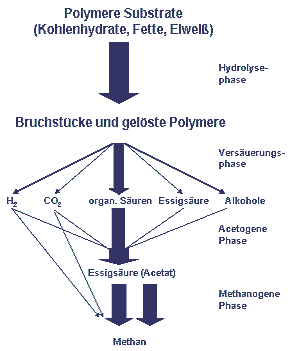
Organic substances (fats, carbohydrates and proteins) are broken down by microorganisms into low-molecular-weight building blocks. This anaerobic conversion is carried out by various bacterial strains, whose activities build on one another. The process takes place in several stages.
The first stage of breakdown is known as hydrolysis. During this stage, the organic substances supplied are broken down into smaller fragments. This takes place with the help of hydrolytic bacteria.
In the second stage (acidogenesis), fermentative microorganisms absorb these fragments and incorporate them into their metabolism. The end products of this stage are fatty acids, such as acetic acid and propionic acid.
The third stage converts the remaining unused metabolic products into acetic acid. For this reason, this stage is also known as acetic acid formation.
In the final stage, methane is formed. Methane-producing bacteria convert acetic acid, hydrogen and carbon dioxide into biogas.
The biogas produced consists of 50-60 % methane (CH4), a high-quality energy carrier, and 30-50 % carbon dioxide (CO2). Small proportions of hydrogen sulphide and hydrogen (<1 %) are also produced.