


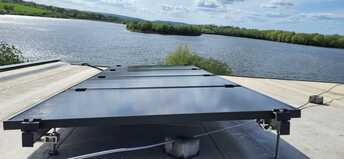
Unlike grid-connected solar installations, off-grid photovoltaic systems are not connected to the public electricity grid. Surplus solar electricity is not fed into the grid, but temporarily stored in a battery storage system. The aim is to achieve self-sufficiency, meaning independence from the public grid.
Off-grid operation:
No grid connection available: Off-grid systems are used where a connection to the public electricity grid is not possible or economically viable. Examples include parking ticket machines, street lights, traffic congestion sensors and agricultural applications such as livestock water troughs, electric fences, irrigation systems and greenhouses.As there is no connection to the grid, storage systems are needed to store the electricity generated for later use.
Larger systems, such as those supplying buildings with an electricity demand of 5,000 kWh/year, are expensive compared with electricity from a grid supplier and are therefore only worthwhile in special cases, e.g. for alpine huts1.
Grid-connected operation:
Direct feed into the home's electrical system: The electricity generated by photovoltaic systems flows directly into the home's AC electrical installation, without battery storage.Inverter: An inverter converts the direct current from the solar cells into 230 V alternating current.
Self-consumption or export to the grid: The solar electricity is used in the household, or any surplus is fed into the grid.
Example projects:
On NABU's Weseraue site, we have installed an off-grid monitoring system to enable the digital recording of birds.Further details can be found in the press release:
NABU Rinteln press release


Monitor