


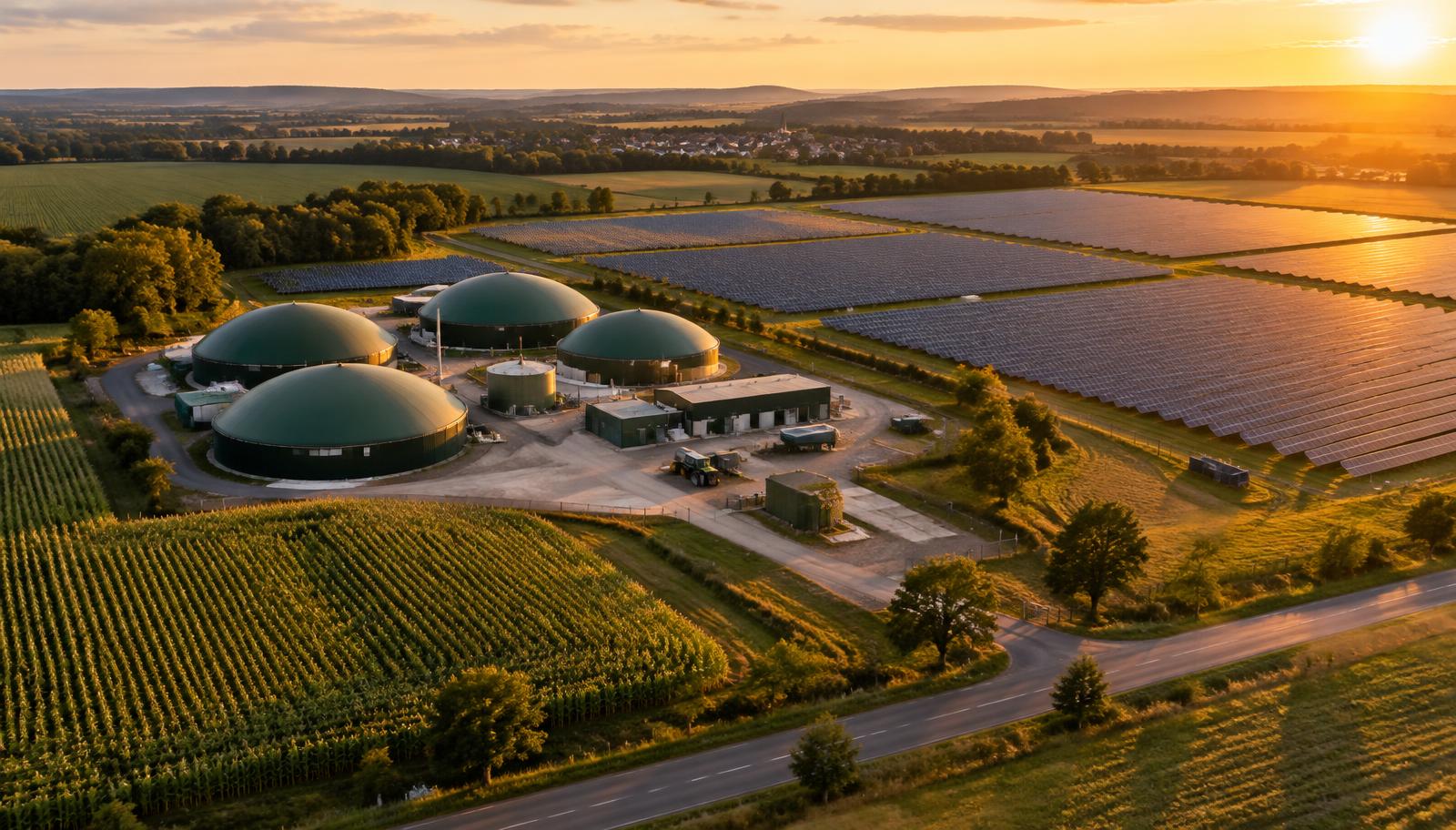
Photovoltaic systems larger than 30kW are considered commercial systems. These can be installed on private homes or commercial buildings.
Two factors are decisive: whether the owner is a private individual or a business, and whether the system is larger than 30kW.
A photovoltaic system on a commercial rooftop can offer numerous benefits.
Here are some aspects that highlight its value:
Secure investment: With government-guaranteed feed-in tariffs over 20 years and reliably predictable electricity yields, the income from a PV system can be calculated with confidence. If investment and running costs are proportionate to income and the system is well maintained, the residual risk is low1.
The precise sizing of a PV system depends on various factors, such as electricity consumption, roof area and orientation.
Oliver Nacke: As a rule of thumb, I always calculate around 1.5 kilowatts peak per 1,000 kilowatt-hours of annual electricity consumption. This allows you to cover approximately 35% of your needs without battery storage and 70% with battery storage, while half of the energy generated is fed into the electricity grid or is available for other uses such as heating, air conditioning and electric mobility.
1 Handwerkszeitung
2 Wealth on the roof
3 Mandatory rooftop solar
Two factors are decisive: whether the owner is a private individual or a business, and whether the system is larger than 30kW.
A photovoltaic system on a commercial rooftop can offer numerous benefits.
Here are some aspects that highlight its value:
Cost savings:
Self-generated solar electricity is often cheaper than electricity purchased from an energy supplier. Installing a PV system on the roof of a trade business can reduce costs in the long term and provide protection against rising electricity prices1.Environmental commitment:
A PV system of its own demonstrates a trade business's commitment to the environment. Reducing its CO2 footprint actively contributes to environmental protection.Secure investment: With government-guaranteed feed-in tariffs over 20 years and reliably predictable electricity yields, the income from a PV system can be calculated with confidence. If investment and running costs are proportionate to income and the system is well maintained, the residual risk is low1.
Tax planning opportunities:
Investing in a commercial PV system offers scope for tax planning and can have a positive impact on wealth accumulation and the subsequent transfer of assets.Use of space:
Commercial and industrial buildings often have large roof areas that are ideal for installing photovoltaic panels. This puts these spaces to good use2.Mandatory rooftop solar:
Some regions have a rooftop solar requirement stipulating that new commercial buildings with a roof area of at least 75 square metres must have a photovoltaic system covering at least half of that area3.The precise sizing of a PV system depends on various factors, such as electricity consumption, roof area and orientation.
Oliver Nacke: As a rule of thumb, I always calculate around 1.5 kilowatts peak per 1,000 kilowatt-hours of annual electricity consumption. This allows you to cover approximately 35% of your needs without battery storage and 70% with battery storage, while half of the energy generated is fed into the electricity grid or is available for other uses such as heating, air conditioning and electric mobility.
1 Handwerkszeitung
2 Wealth on the roof
3 Mandatory rooftop solar