


Project typeBiogas plant
LocationGoa, India
Year of construction2014
DescriptionGoa, India's smallest state, is also one of the country's most popular travel destinations. What began in the late 1960s with the arrival of hippies and people seeking an alternative lifestyle from the West has since developed into a tourism hotspot on the subcontinent, thanks to its idyllic beaches and exotic landscapes. Unfortunately, this has also brought negative developments. Over the decades, environmental problems have increased with the growing number of holidaymakers, the facilities catering for them and the local population.
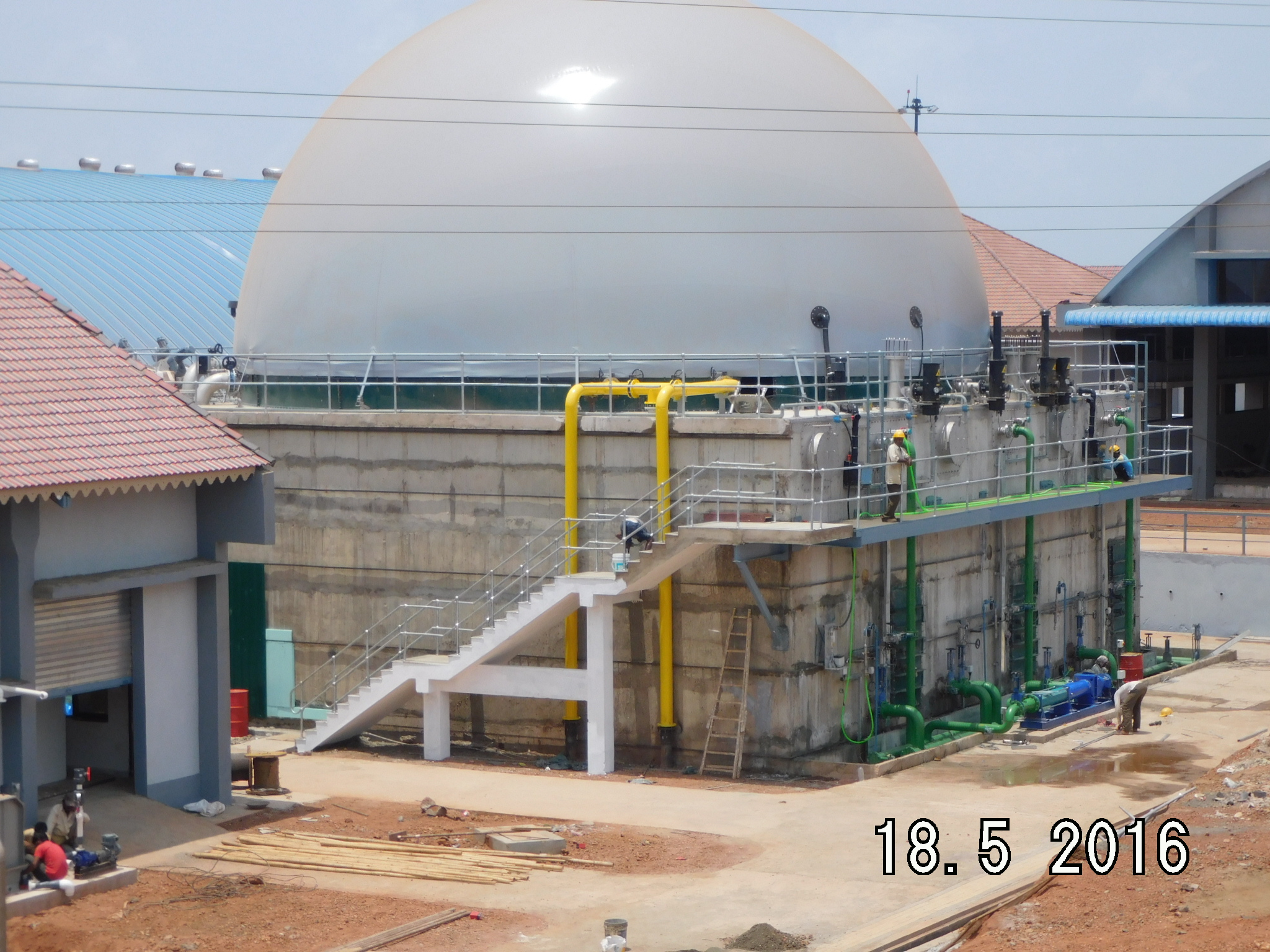
Shortcomings in waste disposal in particular had reached alarming proportions, ultimately prompting local politicians and authorities to take appropriate action. Under the government's “Make in India” programme, the foundation stone for India's most advanced waste treatment plant was laid on 21 November 2014. The plant was completed in around 18 months using German expertise and with a major contribution from ARCHEA Biogas, based in Hessisch Oldendorf. The Chief Minister of Goa, Laxmikant Parsekar, and India's Defence Minister, Manohar Parrikar, recently inaugurated the flagship facility.
The plant uses a combination of mechanical and biological processes (MTB) to first separate organic from inorganic waste cleanly. While the latter is sent for recycling, ARCHEA's plant technology enables the biological residues to be converted into valuable end products such as biomethane, providing an environmentally sustainable energy source at a decentralised level. Electricity generated from a proportion of the biogas in a combined heat and power unit is then used to meet the electricity needs of the entire plant. Organic fertiliser is also to be produced by composting and maturing the dewatered digestate. Around 40,000 tonnes of household waste can be processed annually in this way.
The use of computer-controlled equipment allows a wide variety of input materials to be processed while maintaining high safety standards for employees. The plant's control system was supplied by long-standing partner company Eckel Steuerungstechnik from Rinteln.
The plant was designed to minimise odour nuisance and potential groundwater contamination through seepage. It is also intended to serve as a learning centre to raise awareness among the Indian population of the positive effects of modern waste disposal systems.
Oliver Nacke, founder and Managing Director of ARCHEA, sees this flagship project as confirmation of his company's approach: developing decentralised solutions to the specific problems faced by municipalities in emerging economies, involving local people, policymakers and businesses. Outside Europe, ARCHEA has already successfully implemented similar projects in Brazil, among other countries. These deliver benefits in two ways: by addressing serious shortcomings in waste management and generating energy in the process, thereby giving communities, regions and businesses a degree of self-sufficiency. Oliver Nacke pays particular tribute to the efforts of the Indian partners on site and his employees, who worked tirelessly and with full commitment to complete the project on schedule, despite climatic conditions that were at times extreme for Central Europeans.
Follow-up projects in India are in preparation. Here, too, the aim is to combine environmental and economic objectives to create decentralised waste disposal and supply infrastructure for villages without sewerage or a connection to the electricity grid. ARCHEA also intends to continue contributing to the fight against human-induced climate change in Germany and is working on virtual power plant concepts based on solar, wind, biogas and battery storage, among other initiatives.
Partner SFC India
Video of the plant