


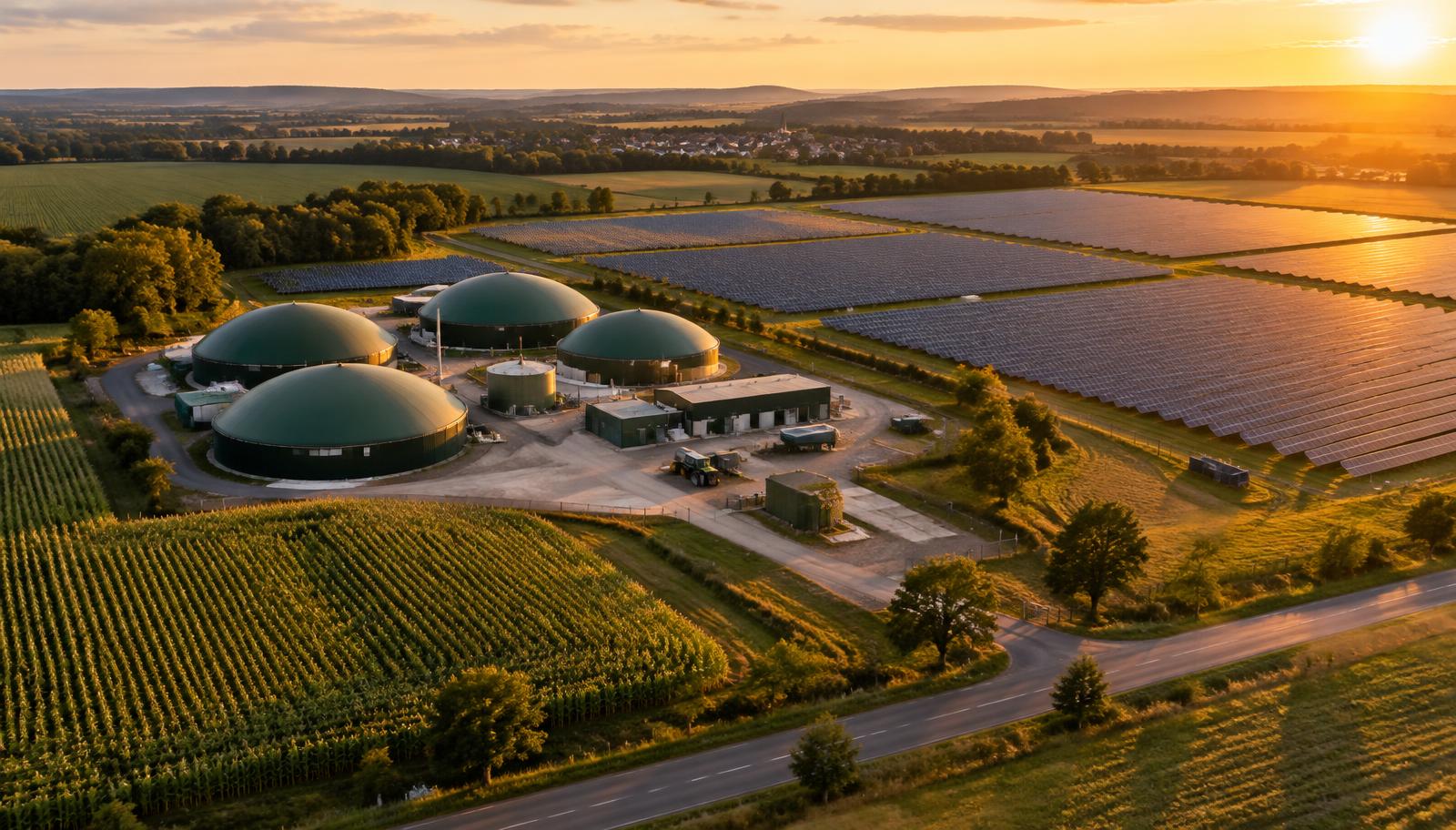
(also known as Liquefied Biomethane, LBM, or Renewable LNG) is a climate-neutral fuel made from liquefied methane produced from renewable sources. Here is some key information:
It remains liquid under atmospheric pressure at a temperature of -162 °C.
Its calorific value is 5870 kWh/m³ at this temperature.
Compared with biogas containing around 55 % biomethane and providing only approximately 5.5 kWh/m³ at 21 °C, its energy density is around 1000 times higher.
Compared with conventional LNG (Liquefied Natural Gas), which contains an average of 98 % methane and 2 % ethane, Bio-LNG can contain up to 99.8 % methane. The remainder is carbon dioxide1.
The organic material is converted into biogas in a digester.
The biogas is purified, giving it the same properties as natural gas (biomethane).
The biomethane is then liquefied to produce Bio-LNG2.
Uses and environmental performance:
Bio-LNG can serve as a climate-friendly alternative to fossil LNG in the transport and energy sectors.
It is climate-neutral when combustion is complete.
Compared with diesel fuel, liquefied methane produces 28 % less carbon dioxide.
The climate footprint of Bio-LNG and LNG is 28 % better than that of heavy fuel oil used in ships.
Combustion produces hardly any nitrogen oxide or particulate emissions.
However, care should be taken to prevent methane slip (unburnt methane) during production, transport or combustion, as methane has up to 30 times the warming effect of carbon dioxide in the atmosphere1.
Overall, Bio-LNG is a promising option for a sustainable and environmentally friendly energy supply. It can help reduce CO₂ emissions and support the transition to renewable energy3.
2 http://www.pitpointlng.com
3 http://dvfg.de
4 agravis.de
Properties of Bio-LNG:
Bio-LNG is a high-quality biofuel with a high energy density.It remains liquid under atmospheric pressure at a temperature of -162 °C.
Its calorific value is 5870 kWh/m³ at this temperature.
Compared with biogas containing around 55 % biomethane and providing only approximately 5.5 kWh/m³ at 21 °C, its energy density is around 1000 times higher.
Compared with conventional LNG (Liquefied Natural Gas), which contains an average of 98 % methane and 2 % ethane, Bio-LNG can contain up to 99.8 % methane. The remainder is carbon dioxide1.
Production of Bio-LNG:
Bio-LNG is obtained from organic material such as waste and residues.The organic material is converted into biogas in a digester.
The biogas is purified, giving it the same properties as natural gas (biomethane).
The biomethane is then liquefied to produce Bio-LNG2.
Uses and environmental performance:
Bio-LNG can serve as a climate-friendly alternative to fossil LNG in the transport and energy sectors.
It is climate-neutral when combustion is complete.
Compared with diesel fuel, liquefied methane produces 28 % less carbon dioxide.
The climate footprint of Bio-LNG and LNG is 28 % better than that of heavy fuel oil used in ships.
Combustion produces hardly any nitrogen oxide or particulate emissions.
However, care should be taken to prevent methane slip (unburnt methane) during production, transport or combustion, as methane has up to 30 times the warming effect of carbon dioxide in the atmosphere1.
Overall, Bio-LNG is a promising option for a sustainable and environmentally friendly energy supply. It can help reduce CO₂ emissions and support the transition to renewable energy3.
Further information
1 http://www.de.wikipedia.org2 http://www.pitpointlng.com
3 http://dvfg.de
4 agravis.de